Title
Advisory Committee on the Assessment of Restitution Applications (The Restitutions Committee)
Date established
16 November 2001
Sponsor
The State Secretary of the Netherlands
Description
The Restitutions Committee was set up by the State Secretary for Education, Culture and Science by order on 16 November 2001 to handle requests for restitution of art objects lost in the Second World War. To read the Decree establishing the Committee, click here.
The Restitutions Committee advises the State Secretary on individual applications for the return of art objects that are now in the possession of the Dutch State. At the request of the State Secretary, it may also make recommendations regarding disputes between private parties about the return of art objects which are not in the possession of the State. The parties to the dispute must submit a joint application to the State Secretary. The Committee is further empowered to make recommendations about the handling of applications submitted in the past. The Committee is chaired by W. J. M Davids and the deputy chair is Professor Inge van der Vlies. To read the full list of members, see below.
To date (March 2015), 135 Recommendations have been issued, all available here.
Regulations binding the opinions of the Restitutions Committee
On 3 March 2014 updated Regulations were issued setting out the procedure and terms of reference of the Restitutions Committee - its task, the factors it takes into account in arriving at its recommendations, the admissibility of claims, the hearing of disputes, issues of confidentiality, appeals, reversal of its binding opinions, etc. To read the Regulations, click here. The earlier Regulations, in force until March 2014, are available here.
Details of the claims procedure
In order to make claims concerning an object in Dutch State possession, or for recommendations on a dispute, details of how to proceed are set out on the Committee's website here.
Contact:
The Minister of Education, Culture and Science
Ministry of OCW
P.O. Box 16375
2500 BJ The Hague
The Netherlands
The Restitutions Committee’s secretariat is located at Lange Voorhout 9 in The Hague. For any questions, contact the secretariat:
PO Box 556
2501 CN THE HAGUE
The Netherlands
Telephone: +31 (0) 70 376 59 92
Fax: +31 (0)70 362 96 54
Email: info@restitutiecommissie.nl
Website: http://www.restitutiecommissie.nl/en
The State Secretary forwards claims applications to the Restitutions Committee which is bound to investigate the matter. After completing its investigations, the Committee makes recommendations and the State Secretary makes his decision. If the decision is made to return the art object, the actual transfer to the applicant then takes place. Full details of the procedure are set out at http://www.restitutiecommissie.nl/en/procedure_for_national_art_collection_claims.html
Decisions
Formerly, the Restitutions Committee website provided a list of the recommendations made and included the associated press releases. However, in late 2012 the site was changed and press releases are no longer always included. The list of recommendations can be found at http://www.restitutiecommissie.nl/en/recommendations_opinions.html
Recent recommendations
20 January 2016: Dutch Restitution Committee recommends restitution of antique jewel to heirs of Jewish art dealer Kurt Walter Bachstitz
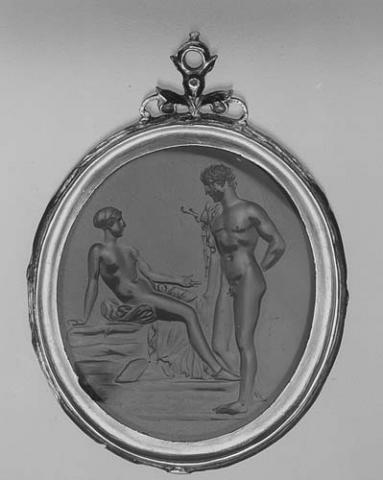
The heirs had previously applied for restitution of the cameo, now in Leiden, but that request was rejected in 2009. The Committee has recommended its return now because of new information coming to light showing that Bachstitz sold it for NLG 6,000 to the German museum director Hans Posse, Adolf Hitler’s art buyer in 1941 to pay for his very sick son to stay in a Swiss sanatorium. In the Committee’s opinion the choice of neutral Switzerland cannot be considered in isolation from the situation that was threatening Jews in the Nazi-occupied Netherlands and concluded that there was involuntary loss of possession as a result of the Nazi regime. Since it is plausible that Bachstitz spent the proceeds of the sale on his son’s stay in safety in Switzerland, the Committee recommended that the heirs should not be made to repay the sum concerned.
The heirs had also requested the return of 14 other works of art from the NK collection. Because there was no indication that the sale by Bachstitz took place forcibly, the Restitution Committee advised the minister not to restitute these works of art.
To read the recommendation, click here.
26 March 2015: Dutch Restitutions Committee rejects Stettiner family claim
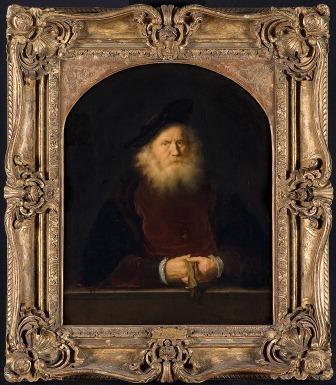
The decision concerns the painting Old Man with Beard by Salomon Koninck (1609-1656).
At the beginning of the Second World War the painting was sold by the art gallery Firma D. Katz in Dieren to the German Alois Miedl, who shortly before had taken over the Amsterdam gallery J. Goudstikker N.V. The work was then sold on to an art buyer acting for Adolf Hitler’s proposed Führer Museum.
In an exhibition catalogue produced by Katz in 1939, the entry about the Salomon Koninck work mentions ‘Stettiner, Paris’ as one of the former collections. According to the applicants this refers to the Jewish Stettiner family and/or the Stettiner et Cie. gallery in Paris.
No information was found during the Restitutions Committee’s investigation about the moment at which the painting left the possession of ‘Stettiner, Paris’.
The Restitutions Committee concluded that the right of ownership of the Stettiner family and/or the Stettiner et Cie. gallery in Paris during the period relevant to the restitution application is not highly probable, and it therefore advised the Minister to reject the applicants’ claim to the artwork.
To read the full report, click here.
14 March 2014: Netherlands returns two paintings to heir of collector Sam Bernhard Levie
The Restitutions Committee announced the restitution of
Amsterdam Town Hall by Gerrit Berckheyde, on loan to the Amsterdam Museum, and
View of a Dutch Harbour with Figures by Adam Willaerts, on loan to the Centraal Museum in Utrecht, both from the Dutch National Art Collection. Until the Second World War they were part of the collection of Jewish art lover Sam Bernhard Levie. He sold the Willaerts painting around 12 September 1940 through a Dutch art dealer to W.A. Hofer, who purchased art on behalf of Hermann Göring. On 15 September 1940 Levie sold the Berckheyde painting to a Dutch art dealer, who in turn sold it to a German museum. During the occupation of the Netherlands Levie and his wife were deported by the Nazis and were killed in Sobibor in May 1943. To read the recommendation of the Committee in full, click
here.
24 January 2014: Dutch Restitution Committee returns painting to daughter of owner.
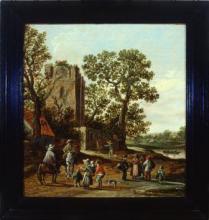
The Committee advised the return of a Van Goyen painting Landscape with Beggars and Two Horsemen by a Ruin in the SNK to "the daughter of its Jewish owner", Gustaaf Hamburger, who fled to the USA in 1940 leaving his property behind which was then seized. The painting was sold on in Vienna and returned to The Netherlands in 1951. But Mr Hamburger was not informed, despite his claim having been registered. It has been in the collection of the Limburg Museum since. The Minister has accepted the advice.To read the full report, click here.
10 December 2013: Press release: Koenigs collection claim rejected
THE HAGUE - The Restitutions Committee has advised Minister of Education, Culture and Science Jet Bussemaker to let an earlier decision to reject the Koenigs claim stand. This advice has been accepted.
The advice issued on 12 November 2013 concerns 34 paintings and 37 drawings from the pre-war art collection of the banker Franz Wilhelm Koenigs. In the case of a few paintings it was not possible to ascertain with certainty they were in the collection, but it has been established for the majority of the artworks.
Currently these works are part of the collection in possession of the Dutch State. Most of the works of art are in the so-called Netherlands Art Property Collection, which consists primarily of items that were returned from Germany to the Netherlands after the Second World War and came in the custody of the State of the Netherlands. The drawings are in Museum Boijmans Van Beuningen in Rotterdam. One painting by Rubens is part of the collection of the Rijksmuseum in Amsterdam.
Franz Koenigs was a German-born banker who settled in Haarlem in the nineteen-twenties and later acquired Dutch nationality. He built up an important art collection in the Netherlands. In 2002 a granddaughter of Franz Koenigs submitted an application for the restitution of the 34 paintings and 37 drawings. On 10 December 2003 the State Secretary for Education, Culture and Science rejected this application on the advice of the Restitutions Committee (RC 1.6). During the years since then some members of Franz Koenigs's family conducted new research and new records came to light. These family members submitted a new claim to the Minister of Education, Culture and Science. The Minister asked the Committee on 13 December 2010 to issue a new advice on the claim. The Committee has investigated the claim in its advice issued on 12 November.
In this advice the Committee expresses the opinion that the new information, in conjunction with what was already known, gives no reason to revise the advice given earlier. According to the Committee it has not been made sufficiently plausible that Franz Koenigs's loss of possession is directly related to the Nazi regime. In this regard it has judged that the transfer of ownership on 2 April 1940, at a time before the German invasion of the Netherlands and in a situation where the Nazi’s were not in power, by Franz Koenigs (who was not Jewish) of his collection to the bank cannot be seen as involuntary as a result of circumstances directly related to the Nazi regime. Of prime importance here is that Koenigs owed a debt to the bank that had become payable. Only after this transfer, and after a subsequent sale to Dutch buyers, artworks got into the hands of the Nazis.
The Committee believes it has been able to have access to all the information necessary to enable it to advise. As regards certain points, about which the applicants wanted to make further investigation compulsory during the procedure, the Committee takes the view that detailed particulars about them are not relevant to the question of whether the claimed works are eligible for restitution.
About the Restitutions Committee
The Advisory Committee on the Assessment of Restitution Applications for Items of Cultural Value and the Second World War advises about claims to items of cultural value lost during the Nazi period, also referred to as Nazi looted art. Since the Restitutions Committee was established in 2002 it has issued advice on 128 cases and has had 140 claims submitted to it. Willibrord Davids has been Chairman of the Restitutions Committee since 1 January 2009.
To read the recommendation, click here.
The Koenigs claimants issued their own press release in response to the decision, in which they state they will be pursuing their claim through the civil courts. See release here.
28 August 2013 Press Release re Claim of Daughter of Gustaaf Hamburger 1887-1977
THE HAGUE 28 AUGUST 2013 - On 4 March 2013 the Restitutions Committee recommended the restitution of three 16th and 17th century ceramic dishes, returned to the Netherlands by the Allies after the war for the purpose of restitution, to be returned from the National Art Collection, which had retained them, to the daughter of Gustaaf Hamburger, the Jewish owner. The Minister has accepted this recommendation.The dishes were part of the private collection of lawyer and banker Gustaaf Hamburger, who fled to the United States in 1940. His house and all his art collection were seized by the Dienststelle Mühlmann, a German looting organisation. Despite his efforts to recover his property even before the end of the war, these dishes were not returned to him and he was not made aware that two of them were in the possession of the Dutch government. To read the recommendation in full, click here.
8 May 2013 Press Release re Claim of Heirs of Richard Semmel - in which the Restitutions Committee prioritises the interest of museums to keep paintings over the rights of claimants to restitution
THE HAGUE, 8 MAY 2013 – The Restitutions Committee has published four binding expert opinions regarding claims to paintings in Dutch museums. The works in question are Dune Landscape with Deer Hunt by Gerrit Claesz Bleker in the Frans Hals Museum in Haarlem, Madonna and Child with Wild Roses by Jan van Scorel in the Centraal Museum in Utrecht, Christ and the Samaritan Woman at the Well by Bernardo Strozzi in Museum de Fundatie in Heino/Wijhe and River View with Mooring by Maerten Fransz van der Hulst in the Groninger Museum’s collection. The last of these paintings must be returned to the grandchildren of the heir of the former owner, Richard Semmel. The other three paintings do not have to be returned.
Richard Semmel (1875-1950) was a Berlin businessman and art collector. Immediately after the Nazis came to power, Semmel was placed under extreme pressure because of his Jewish ethnicity and his active involvement in the Deutsche Demokratische Partei (German Democratic Party). Semmel fled Nazi Germany in 1933 to escape economic and political persecution. He settled in Amsterdam first, but later went to New York.
Semmel had part of his art collection sold at auction in Amsterdam on 21 November 1933. The Restitutions Committee regards this sale as involuntary, provoked by circumstances that were directly related to the Nazi regime. Although at first glance the sale was dictated by economic factors, the committee believes that this cannot be seen in isolation from the persecution of Semmel by the Nazis. Circumstances meant that Semmel was in dire need of money to keep his company afloat and to support his family. Semmel died in New York in 1950 in reduced circumstances and without offspring. In his will he appointed a good friend, who like him had also fled Nazi Germany and who cared for him until his death, as his heir.
Four of the paintings that went under the hammer in 1933 are now in Dutch museums. The grandchildren of Semmel’s heir asked these museums to return the works of art to them. The grandchildren maintain that the four claimed paintings now belong to them by right of succession. They also declare that they have an emotional interest in the works of art because they are linked to the mutually interwoven histories of their own family and the Semmels as shaped by persecution and flight. The four museums and the grandchildren of Semmel’s heir asked the Restitutions Committee to advise on the four claims. All the parties declared in advance that the opinions would be accepted as binding.
One of the binding opinions concerns the painting Dune Landscape with Deer Hunt by Gerrit Claesz Bleker, which has been in the collection of the Frans Hals Museum in Haarlem since 1934. The Committee recommends that this painting should not be returned because a reasonable case that this work was owned by Richard Semmel has not been made.
In two of the four opinions, the Committee finds that the interest put forward by the applicants in regard to the return does not carry sufficient weight to set aside the two museums’ title to the works. The paintings concerned are Christ and the Samaritan Woman at the Well by Bernardo Strozzi, which forms part of the collection of Museum de Fundatie in Heino/Wijhe, and Madonna and Child with Wild Roses by Jan van Scorel, which has been held by the Centraal Museum in Utrecht since 1958. In the opinion of the Committee, both museums have convincingly demonstrated that the retention of the two paintings is of great importance to their collections and to the museum-going public. On the other hand, the Committee finds that the grandchildren of Semmel’s heir’s interest in restitution carries less weight. The Committee points to the fact that these grandchildren are not related to Richard Semmel, never knew him and have no recollections of the paintings. That the art collection was important to Richard Semmel himself has no bearing on the importance of the work to his heir’s descendants. Furthermore in the past Semmel and his heir made no attempt themselves to recover the paintings. The conclusion of this weighing of interests is that neither painting has to be returned to Semmel’s heir’s grandchildren. The Committee links to this opinion the recommendation that both museums should acknowledge the history of the former owner, Richard Semmel, and the fate of his art collection, by means, for example, of a caption alongside the painting, a publication or an exhibition.
In the fourth binding opinion the assessment leads to a different conclusion. It relates to a painting in the collection of the Groninger Museum, the seventeenth-century River View with Mooring by Maerten Fransz van der Hulst, which in the past was attributed to Jan Josefsz van Goyen. The Committee advises that this work of art should be returned to the grandchildren of Semmel’s heir because the museum’s title does not carry sufficient weight to resolve the dispute in its favour. The circumstances and statements by the museum indicate that the museum has little or no interest in the painting River View with Mooring, probably because it does not fit in with its collection. The work of art has been in its repository for years and is not exhibited or loaned. Furthermore, the museum acquired the painting at no cost and there are no indications that it has incurred any expenses in regard to it, for example in having the painting restored. On the other hand, the Committee regards the emotional and moral importance of the return to the heir’s grandchildren carries more weight given the museum’s lukewarm interest in retaining the painting.
Binding Opinions: To read the four opinions:
Click here for the claim for Christ and the Samaritan Woman at the Well by Bernardo Strozzi from the estate of Richard Semmel, currently owned by Museum de Fundatie;
Click here for the claim for Madonna and Child with Wild Roses by Jan van Scorel from the collection of Richard Semmel, currently in the possession of Utrecht City Council;
Click here for the claim for The Landing Stage by van Maarten Fransz. van der Hulst from the estate of Richard Semmel, currently owned by Stichting Kunstbezit en Oudheden Groninger Museum;
Click here for the claim for Stag Hunt in the Dunes by Gerrit Claesz. Bleker, with a claimed provenance of Richard Semmel, currently owned by the Municipality of Haarlem
24 January 2013: Dutch Restitutions Committee rejects claim by heirs of Kunsthandel Firma D. Katz of Dieren to 188 works of art
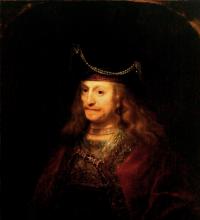
Bol Man with high cap
The Dutch Restitutions Committee has rejected a claim for restitution of 188 works of art from the Dutch National Art Collection submitted by 21 descendants of the Jewish brothers Benjamin and Nathan Katz, who owned Kunsthandel Firma D. Katz of Dieren from 1930 onwards. The applicants contended that Kunsthandel Katz involuntarily lost possession of these 189 claimed objects, most of which were paintings, during the Nazi regime through forced sales to Alois Miedl, to Hans Posse for the Führermuseum in Linz and to Hermann Göring from July 1940 onwards. The Restitutions Committee concluded that virtually none of the works of art meet the conditions for restitution. The two key requirements under applicable policy are that it must be proved with a high degree of probability that Kunsthandel Katz was the owner of the works of art and that the sale of the objects took place under duress.The only exception in the ruling was the painting Man with high cap by Ferdinand Bol, regarding which the Restitutions Committee believes that both ownership and the coerced nature of loss of possession were sufficiently proved and this painting will be returned to the descendants of the Katz brothers.
To read the full text of the decision, click here. To see images of some of the artworks claimed, click here.
At the same time, in related claims,a Jan Steen painting is to be returned to the heirs of Wilhelm Mautner of Amsterdam and a Van Brekelenkam painting to the heirs of Adolf Arnhold who had fled to Switzerland from Germany. To read the Mautner decision, click here. To read the Arnhold decision, click here.
7 January 2013 Dutch Restitutions Committee rejects claim to Tilman Riemenschneider sculptures
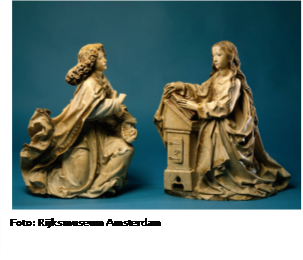
The Restitutions Committee advised the Dutch Minister for Education, Culture and Science to reject a claim to two Tilman Riemenschneider sculptures in the Rijksmuseum claimed by the heirs of Maximilian von Goldschmidt-Rothschild. The Minister has adopted this recommendation. The recommendation concerns the two alabaster sculptures Annunciation (NK 124 and NK 125) by German artist Tilman Riemenschneider, one of the leading sculptors of the Late Gothic and Early Renaissance period. The 15th-century sculptures are among the 1,000 best pieces of the collection of the Rijksmuseum in Amsterdam. To read the recommendation, click here.
18 September 2012. 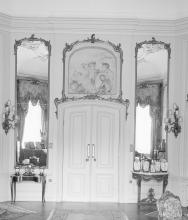 The Committee rejected two claims from the Gutmann family, the first for a Jacob de Wit grisaille, 'Allegory of Autumn' (left) from the heirs of Fritz and Louise Gutmann of Huize Bosbeek, Heemstede, Netherlands, and the second from the heirs of both Fritz and Louise Gutmann and Herbert Gutmann for a 16th century Gubbio dish. The grisaille is now in the ownership of the Drenthe Museum which acquired it in 1964, and the dish is part of the Netherlands Art Property Collection. To read the recommendations, click here for the grisaille, and here for the dish.
Recommendations 25 May 2012
On 25 May 2012 the Committee announced that the Secretary of State had accepted its recommendation that a 17th century chest belonging to the late antiques dealer, Salomon van Leeuwen, should be returned to his heir. To read the recommendation, click here. At the same time the Secretary of State accepted the Committee's recommendation that the claim for varous artworks by the family of the late antiques dealer Louis Morpurgo be turned down for lack of evidence as to the ownership of the artworks. To read this recommendation, click here.
Recommendation 17 February 2012
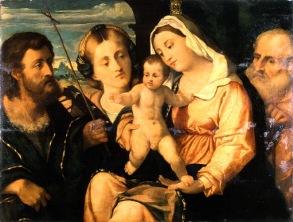
A painting from the workshop of Palma Il Vecchio, The Holy Family with John the Baptist and St. Catherine, is to be returned to the heirs of art dealer Saemy Rosenberg, following a recommendation of the Committee. A claim for a further twelve objects was rejected. A claim by the heirs of Herbert Gutmann for four bronzes from the collection of Eugen Gutmann was also rejected. For further details, see the press release here, the Rosenberg recommendation here, and the Gutmann recommendation here.
Recommendations 2 February 2012:
Edouard Jonas: Two paintings are to be restituted to the heir.
Adolf Arnhold: A claim for three works of art was rejected.
Aron Hiegentlich: Three ceramic objects are to be restituted to the family. The claim for a fourth ceramic object was rejected.
Simon De Haan: A claim for fourteen works of art was rejected.
To read the press release, click here. To read the full recommendations, see below.
Recommendation 2 November 2011:
Dutch Restitutions Committee rejects claim of Robert May heirs
 The Dutch Restitutions Committee issued a press release on 2 November 2011 with regard to its recommendation of 19 September 2011 rejecting a claim to some 335 art objects in the Rijksmuseum in Amsterdam and concluding that the case was settled after the war. The objects formerly belonged to Jewish banker and art collector Robert May.
The May collection was confiscated by the Nazi authorities in 1942, and was purchased by the Dutch authorities from the occupying forces in 1944 for the Rijksmuseum in Amsterdam. The Restitutions Committee states that during the war, in a gentleman’s agreement, May had already declared to the Rijksmuseum that he would support this sale. The proceeds of the sale eventually went to May. In a written declaration to the Rijksmuseum in 1946, May said that he ‘completely agreed’ with the sale of his collection to the Dutch state. The Committee regards this statement as ‘one that was made freely to uphold the sale of his collection to the Dutch State during the war,’ as a result of which the sale must now be regarded as legitimate. In its recommendation, the Committee advised the State Secretary to reject the claim, which was submitted by one of May’s successors. The State Secretary decided to adopt the Committee’s recommendation on 26 October 2011. Click here for the full text of the recommendation
List of Owners
The full list of owners whose heirs have made claims to the Committee (and whose names have been published - many have not) is set out below in chronological order of claims. Where a family has brought more than one case, their name is listed each time, again in the chronological order.
Friedrich (FBE) and Luise Gutmann
Mr J.H. Gosschalk
The art dealer Cramer
Franz Koenigs
Amsterdam art gallery Vecht
Isaac Goudeket
Jacques Goudstikker
Hartog Koopman
Anne Frank
Arthur Feldmann
Martin Aufhäuser
Milly Antonie von Friedländer-Fuld
Jonas Alexander van Bever
Philipp Brünell
Markus Mayer (Max) Rothstein
Johanna Margaretha Stern-Lippmann
Hugo Felix Kaufmann
Frits Kaufmann and Marie Kaufmann-Parser
Kunsthandel Mozes Mogrobi
Galerie Lemaire (Matthias Ludovicus Joannes Lemaire)
Salomon Anholt, Levie Hakker and Jesaia Hakker
Art dealership Firma Joseph M. Morpurgo
Max Alsberg and Ellinor Käthe Margot Clara Sternberg
Schoontje Goldsteen
Dr. D. van Cappellen
Leopold Salomon and Kätchen Henny Alma Auguste Carstens
Cornelis Maria Leonard ter Laare
Siegfried Paul Daniel May and Rosine Mariane May-Fuld
Franciszek and Czeslaw Letowski
John Jaffé and Anna Emilie Jaffé-Gluge
Marcus de Vries
Israël Z. and Matje Verdoner
Kunsthandel Mossel
Abraham van Leeuwen and Alexander Isaäc van Leeuwen
James Alexandre van Brabant
Firma S. van Messel and dealership J. van Messel of Amsterdam
Rosa and Jakob Oppenheimer
Ernst Flersheim
Hugo and Alice Lachmann
Ernst Flersheim
Art dealership J. Stodel
Art dealership A. Staal
Art dealership Levie Rubens
F. H. von Podwinetz
George Eduard Behrens
Dotsch
Jacques Goudstikker
Robert May
Weijers
Dr Sigmund Wassermann
Kurt Bachstitz
Ernst Paul Caesar Heinrich Proehl
Albert Heppner
Abraham Adelsberger
Catalina Von Pannwitz-Roth
Max Cassirer
Amsterdam art dealer Carel van Lier
Leo Nardus
Hans Ludwig Larsen
Richard Semmel
Art dealership Nathan Katz
Kurt Bachstitz
Art dealership Moritz Schönemann
Wilhelm Mautner
Eduard Hollander
Daniel Wolf
Rosa and Jakob Oppenheimer
Max Stern
Samuel van den Bergh and Daniel Wolf
Joseph Stodel
Hartog Zadick and Betje van Gelder
Saemy Rosenberg
Fritz Gutmann
Curt Glaser
Mathiason
Rosenbaum
Fritz Gutmann
Otto Mayer
Fritz Gutmann
Louis Morpurgo
Rosa and Jakob Oppenheimer
Robert May
Simon De Haan
Aron Hiegentlich
Adolf Arnhold
Edouard Jonas
Herbert Gutmann
Saemy Rosenberg
Van Aldenburg Bentinck II
Salomon van Leeuwen
Louis Morpurgo
F. B. E. Gutmann
Gutmann
Annual Reports
In addition, the Committee has published Annual Reports which are available below:
2002 This annual report includes the history and working practices of the Restitutions Committee, the Parliamentary documents about the foundation of the committee, and information about the five cases dealt with by the committee in 2002. The appendices contain the text of the Decree Establishing the Advisory Committee on the Assessment of Restitution Applications and of the recommendations.
2003 This annual report includes information about the seven cases the Restitutions Committee made recommendations for in 2003. In the appendices are the text of the recommendations, the 'Recommendations Concerning the Art Trade' of the Ekkart Committee, and the response of the government to these.
2004 This annual report includes excerpts from the cases in which the Committee made recommendations in the course of the year, information on the (re)appointing of the members of the Restitutions Committee and explanatory notes on the final recommendations of the Ekkart Committee. In the appendices are the text of the recommendations, the decree (re)appointing members of the Restitutions Committee, the final recommendations of the Ekkart Committee and some media reports.
2005 This annual report includes information about the six cases the Restitutions Committee made recommendations for in 2005. From page 33 onwards is a summary of the Goudstikker recommendation.
2006 In addition to the usual discussion of the recommendations issued by the Committee – 12 in total in 2006 – the 2006 report also contains information on the Committee’s restitution procedure and the events that took place in the field of restitutions in 2006.
2007 This annual report includes details of claims and recommendations made in the course of 2007.
2008 This annual report includes details of claims and recommendations made in the course of 2008.
2009 This annual report includes details of claims and recommendations made in the course of 2009.
2010 This annual report includes details of claims and recommendations made in the course of 2010.
2011 This annual report includes details of claims and recommendations made in the course of 2011.
The Restitutions Committee's description of itself and the list of its members:
"During the Second World War, the Nazis plundered, confiscated or purchased vast amounts of art from the Occupied Territories. After liberation, many of these items of cultural value were brought back to their country of origin by the Allies and placed under the administration of national governments, which were tasked with ensuring that these were returned to their rightful owners or their heirs. In the Netherlands, the Netherlands Art Property Foundation (SNK) played a key part in the restitution of art objects. Some of the items of cultural value that were not returned after the war were auctioned off in the 1950s. The remaining works were brought together in the Netherlands Art Property Collection (NK collection), as part of the National Art Collection.
Since the end of the 1990s, the restitution of looted art property has become very topical again, both at home and abroad. In 1998, the Washington Principles on Nazi Confiscated Art were established at an international conference, and the following year, the Parliamentary Assembly of the Council of Europe adopted a similar resolution on Looted Jewish Cultural Property. These declarations call for a lenient restitutions policy for property looted during the war, and recommend opting for a form of alternative dispute settlement outside the standard judicial process. The basic principles of these declarations were confirmed more than ten years later in the Terezín Declaration (Czech Republic, 2009)
Established by the Dutch government, the Origins Unknown Committee (also known as the Ekkart Committee, named after its chairman Prof. Dr R.E.O. Ekkart) plays an important role in the Restitutions Committee’s history. From 1997 to 2004, under the supervision of the Ekkart Committee, the Origins Unknown Agency (BHG) investigated the provenance of all objects in the NK collection. At the same time, the government announced a more liberal restitutions policy based on the recommendations of the Ekkart Committee, which, in general, called for a more generous restitutions policy.
In 2001, the government decided to establish an independent advisory committee that would investigate and assess claims to looted items of cultural value. According to the government, this suited a more policy-related approach to the issue of restitution than a strictly judicial one. Thus, pursuant to a decision dated 16 November 2001 by the Secretary of State for OCW, the Advisory Committee on the Assessment of Restitution Applications for Items of Cultural Value and the Second World War was established.
Since January 2002, the Restitutions Committee has issued independent advice on individual applications for restitution.
The Restitutions Committee and the secretariat
The Restitutions Committee comprises lawyers, a historian and an art historian.
W.J.M. Davids (Chair)lawyer; was president - previously justice and vice-president - of the Supreme Court of the Netherlands. He was also a junior civil-law notary, senior lecturer at the University of Groningen, judge at and, later, vice-president of the Court in Assen, and president of the Benelux Court of Justice. He was also chairman of the Committee of Inquiry on Iraq.
J.Th.M. Bank
historian; retired professor of Dutch history at Leiden University, specialising in Dutch cultural history.
R. Herrmann
lawyer; justice and vice-president of the Amsterdam Court of Appeal, as well as justice and, until recently, vice-president of the Supreme Court of the Netherlands. Former chair of the Dutch section of Amnesty International; also member of the Human Rights Committee of the Advisory Council on International Affairs.
P.J.N. van Os
lawyer; former civil-law notary; former deputy justice at the Amsterdam Court of Appeal.
E.J. van Straaten
art historian; former director of the Kröller-Müller Museum, former member of the Museum Acquisitions Committee 1940-1945, established under the auspices of the Netherlands Museum Association.
H.M. Verrijn Stuart
lawyer; legal reporter/analyst, essayist, member of the Advisory Council on International Affairs, former scientific employee of the Clara Wichmann Institute.
I.C. van der Vlies (vice-chair)
lawyer; professor of Constitutional and Administrative Law at the University of Amsterdam; previously a member of the Dutch Council for Culture, member of the Public Administration Council and chair of the Committee evaluating the Cultural Heritage Preservation Act.
Secretariat
To perform its duties, the Restitutions Committee enlists the support of its research agency/secretariat under the management of Ms E. Campfens (director). The secretariat also comprises the following staff: Ms A. Marck (deputy director/researcher), Ms T. Brandse (office manager), Ms I. El Achkar (management assistant), Mr E.J.A. Idema (legal assistant), Ms A.M. Jolles-van Loo (archivist), Mr F.M. Kunert (researcher) and Ms E. Muller (researcher).
The staff members investigate the claims and report their findings to the members of the Committee. They look after the day-to-day affairs and prepare the Committee meetings. The director also acts as spokesperson.
The Committee’s secretariat is located at Lange Voorhout 13 in The Hague and it also has an office at its disposal at the National Archives of the Netherlands in The Hague.
Sourcehttp://www.restitutiecommissie.nl/en most recently accessed on 9 March 2015